Two New Book Recommendations
Refugees and Population Transfer Management in Europe, 1914–1920s & The Flight from Estonia to Sweden during World War II
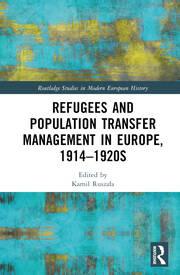
Edited By Kamil Ruszała, 354 Pages.
This book provides a comprehensive study of refugee movements and population transfers across Europe during the First World War and the early postwar period.
Drawing parallels with contemporary migration issues, the book serves a social and educational purpose by highlighting Europe’s history of migration and emphasizing the relevance of past experiences to current challenges. It seeks to enhance understanding, raise social awareness, and contribute to the broader discourse on war refugeeism by applying historical insights to address contemporary migration crises.
The authors discuss how issues of refugee movements and population transfers were addressed in different contexts and reflect on refugees as both war-induced migrants and political tools for authorities. The book covers a range of topics including humanitarian systems during the war and the early postwar period, refugee locations, policy influence, national issues, self-organization, and aid for refugees, as well as immigration control in time after bordering the postimperial Europe. It also addresses the composition of populations in postwar reconstruction processes and its population dynamics.
This volume will be of value to those interested in modern European history, social and political history.
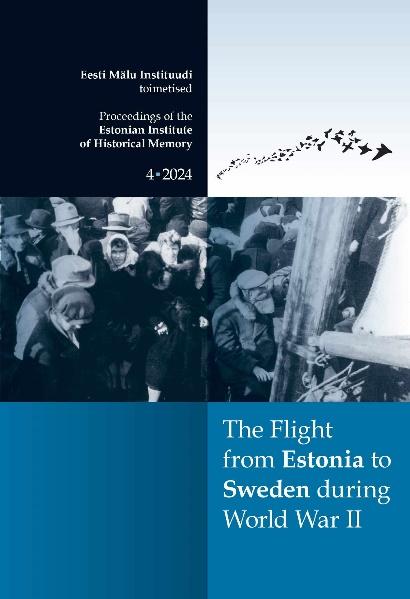
Compiled by Hiljar Tammela and Meelis Maripuu, 320 Pages.
An estimated 70,000–80,000 people flied to the West from Estonia in the Second World War years, making it one of the largest waves of migration and one of the most important events of Estonian recent history, directly affecting the destinies of very many people.
Regarding this exodus, few traditional archival sources (lists of people departing and arriving) are available, as people mostly fled in secret on the basis of oral agreements and under conditions of immediate danger. The flight has been researched for decades relying primarily on memoirs, which provide an excellent overview of the escape journey of an individual or a family, but it is difficult to put an overall picture together out of such memories.
The seven articles in this collected work present new information, which largely originates from archival sources located outside of Estonia. Some of it has become freely accessible only in recent years. The authors shed light on various aspects of the great exodus, examining among other things the reception of and policies towards Estonian refugees in neighbouring Finland and Sweden. This is the first collection of research articles dedicated to the theme of flight from Estonia to Sweden during the Second World War.