“Free Winds” exhibition highlights the incredible transatlantic journeys of Estonia’s and Latvia’s post-World War II refugee ships
“Free Winds/Vabaduse tuuled/Fria vindar” is available online at https://freewinds.vabamu.ee/ in English, Estonian, and Swedish. In summer 2025, the exhibition will be displayed at Vabamu in Tallinn.
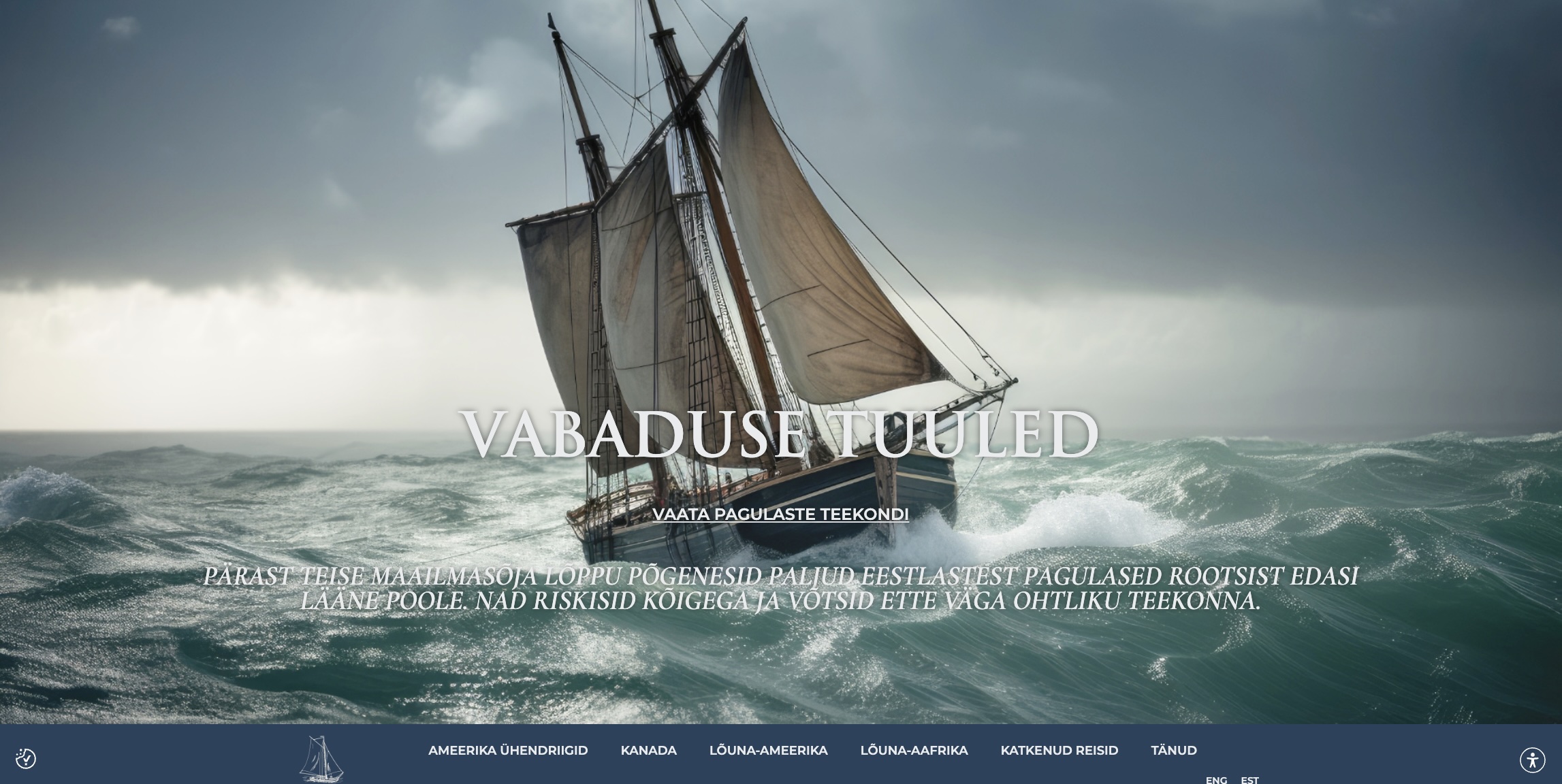
“Free Winds,” a new exhibition at Vabamu Museum of Occupations and Freedom, highlights how in the late 1940s, thousands of Estonians and Latvians secretly fled from Sweden in old, battered boats and sailed across the Atlantic Ocean to freedom.
The refugees had just escaped to Sweden during the Great Flight (Suur Põgenemine) when about tens of thousands of Balts, fearing for their lives, fled their homelands. In autumn 1944, as the Nazi German occupation collapsed and the Soviet Army advanced across the Baltic states, refugees crowded into small boats and escaped across the Baltic Sea. It is estimated that about 27,000 Estonians, 4,000 Latvians, and 500 Lithuanians reached Sweden.
The Balts thought they were safe in Sweden but soon the Soviet Union began pressuring the Swedish government to send the refugees back. Having survived the 1940-41 Year of Terror when Soviet troops occupied the Baltic states and imprisoned, murdered, and deported tens of thousands of people, the refugees had no illusions about what would happen if they were forced back home.
In the immediate post-World War II period, it was difficult for refugees to emigrate from Sweden legally and even harder for them to enter the United States and Canada. Preferring to control their own destinies, small groups of refugees secretly pooled their savings, bought and repaired old boats, and quietly sailed as far away as possible from the Soviet Union.
“Free Winds” tells the stories of these brave men, women, and children.
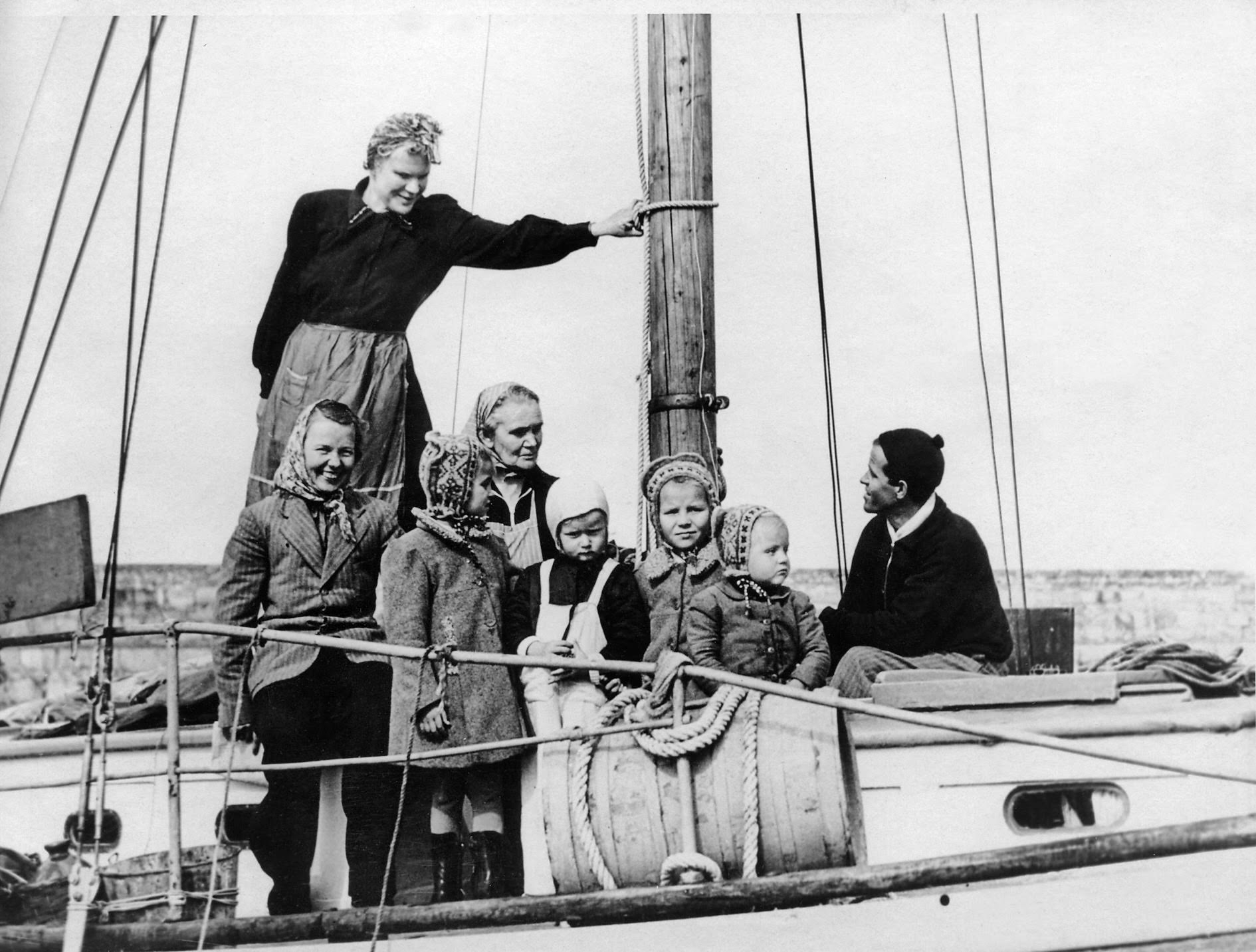
According to maritime historian Jüri Vendla, about 47 Baltic ships left Sweden between 1945 and 1951. At least 17 vessels made it to the United States, 11 reached Canada, 7 sailed to Argentina, 2 landed in Brazil, and 3 reached South Africa. Estonians organized most of the unsanctioned voyages, but Latvians also captained ships. Some of the boats didn’t make it: Several were forced to end their journeys early and others probably sank or may have been seized by patrolling Soviet ships. However, since the voyages were planned in secret, accurate figures are unknown.
The popular press dubbed the vessels “Viking boats” because they came from Sweden and because, thanks to their skillful crews, most made it across the Atlantic. “No one, except the Vikings, has come in such a small boat,” an astonished Canadian official exclaimed when the Astrid landed in Quebec in 1948 with 29 people on board.
One of the goals of “Free Winds” is to advance Jüri Vendla’s research presented in Unustatud merereisid: Eestlaste hulljulged põgenemisreisid üle Atlandi 1940.aastate teisel poolel (Forgotten Sea Journeys: The daring escapes of Estonians across the Atlantic in the late 1940s). “Free Winds” is based on Unustatud Merereisid, the only comprehensive account of the Estonian and Latvian Viking ships. When his book was published in 2010, Mr. Vendla noted that Soviet censorship had suppressed knowledge of this period of Baltic history and that further research was warranted.
Lisa Trei, a graduate student at Tallinn University, developed and curated “Free Winds” through a partnership with Vabamu, where she was a Fulbright Specialist in spring 2024 and is currently a consultant. Ms. Trei previously worked at Stanford University, which has a longstanding relationship with Vabamu through the Estonian and Baltic Studies Program at Stanford Libraries. The exhibition is hosted on Vabamu’s NoVa (Noorte Vabamu) educational platform. NoVa is directed by Ede Schank Tamkivi, who served as a key partner on the exhibition. Listen to an interview with Ede talking about “Vabaduse tuuled” on Klassikaraadio.
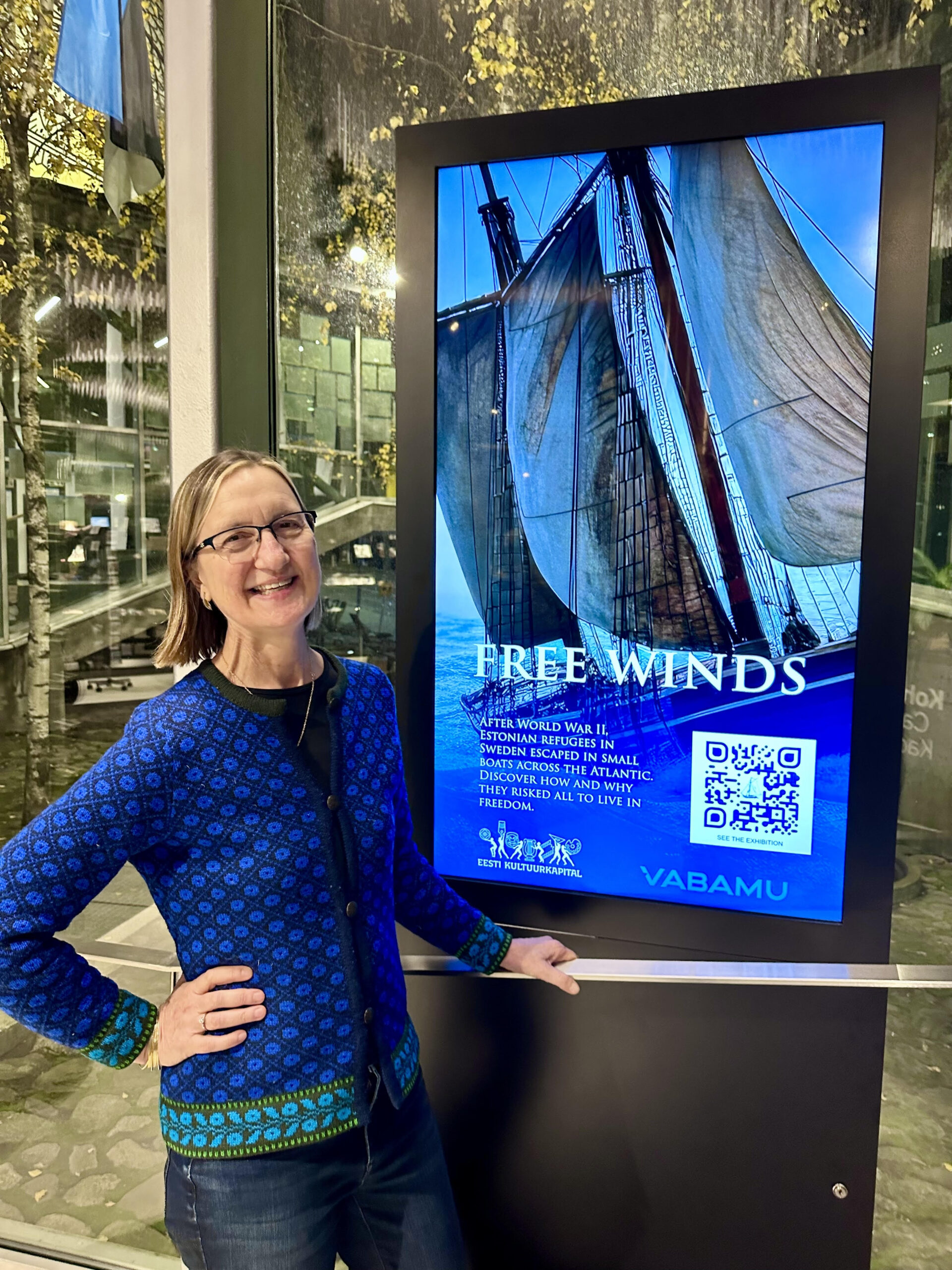
The Cultural Endowment of Estonia and the Estonian American National Council generously provided seed funding for “Free Winds.” Franka and Anni Vakkum designed the exhibition, and Inga Solman developed the site. The Estonian Ministry of Foreign Affairs arranged for Maja Soomägi, a graduate student at the University of Glasgow, to serve as a 2024 summer intern at Vabamu, where she served as a consultant and Swedish translator. Please contact Lisa Trei at lisa.trei@vabamu.ee with comments, corrections, and additional information. Please also share “Free Winds” with those who sailed on the Viking ships, their families and communities, and anyone interested in this under-researched period of Baltic history.